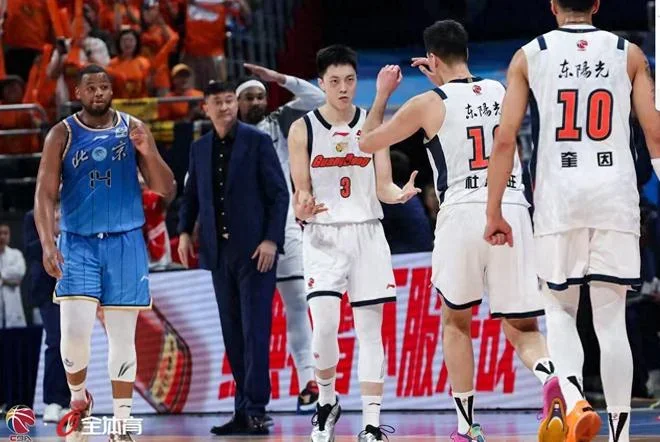

Guangdong’s luck finally ran out. After a hard-fought Game 3, they fell to Beijing and were eliminated from the playoffs, once again exiting in the quarterfinals just like last season. For a team that had boldly declared championship ambitions before the season, this defeat is nothing short of a major failure.
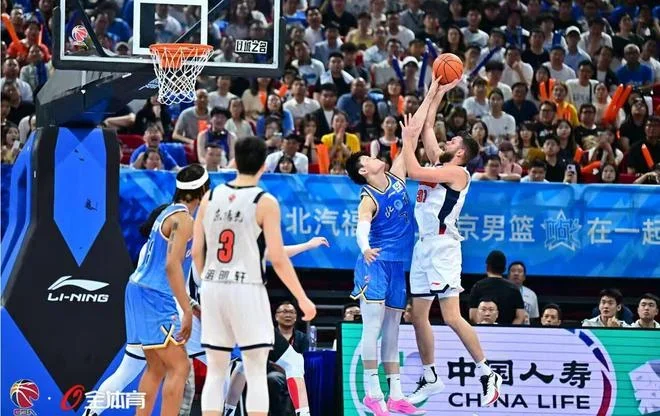
In this crucial game, not a single player from Guangdong performed at their expected level. Even Quinn, who led the team with 25 points, shot just 1-of-9 from three-point range, a conversion rate barely above 10%, with an overall field goal percentage of only 47% — hardly what is expected of a qualified import. Only three players reached double figures in scoring, while the number of players who scored zero was equally high. The team’s shooting percentages across all categories were inferior to Beijing’s, making it almost impossible to avoid defeat.
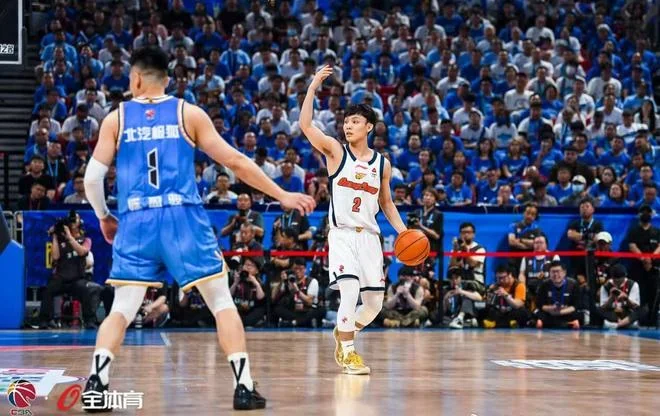
Among the three players who failed to score, Xu Jie stood out as the most disappointing. Cui Yongxi’s scoreless performance could be excused as he is still recovering from injury, and it was understandable that Chen Jiazheng recorded zero points in just two minutes of garbage time. But it was difficult to accept that Xu Jie, a two-time All-Star fan-voted starter who played 17 minutes in this game, went 0-for-3 from the field and finished scoreless. Despite knowing that referees would be strict during the playoffs, Xu Jie picked up two early fouls in the first quarter — some of which were completely avoidable. As a result, coach Du Feng substituted him early, and he barely played in the second half, essentially being benched.
What frustrates fans even more than the scoreless performance is Xu Jie’s recurring playoff slump. His regular-season and postseason forms are like night and day. In this year’s six playoff games, he finished with single-digit scoring in four, including a zero-point effort in the last game — a far cry from his reputation. Meanwhile, Hu Mingxuan, who struggled during the regular season, turned it around in the playoffs, scoring in double figures in five of six games. The contrast between the two is stark. Reports also emerged that Xu Jie had brought his girlfriend to the away game in Beijing, a move that, if true, raises serious questions about his professionalism.
Xu Jie’s only obvious strength is his ball-handling and playmaking, but his defense is a weakness. In the playoffs, his inconsistency has been glaring — he shot just 37% from the field and 29% from three-point range. Such numbers suggest he is not a player who can anchor a team. Some fans have already suggested that he should be used only as a bench player in the future. “In recent playoffs, Xu Jie just hasn’t delivered,” one Guangdong supporter said. “They might as well trade him.” What do you think?